CRM Updates
Every call, agreed next step, and follow-up task written back to your CRM — so the record stays complete without adding work for your reps.
You set a standard for how calls should go. Whether the team holds that standard, call after call, is something you mostly find out too late: when a customer complains, or a number moves the wrong way.
Listening to enough calls to catch it yourself is not realistic. A manager who tries to review calls manually spends hours a week on it and still sees only a fraction. The rest goes unchecked.
Sales Signals evaluates every call against the things that define your standard: whether objections are handled well, whether your process is followed, whether the mandatory steps of a call are present. Each becomes a metric you can track.
You set a target for each metric and a threshold that matters. When a rolling average slips past it, Sales Signals alerts you. You are not watching a dashboard hoping to notice a problem; the system tells you when one appears, while it is still small enough to fix.
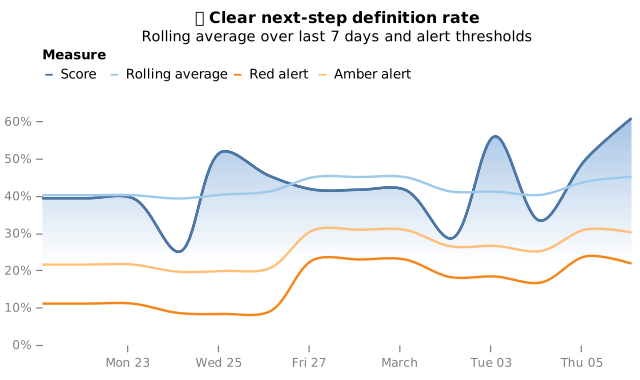
Example: Clear Next-Step Definition Rate measures the percentage of sales calls that end with a concrete, time-bound next action agreed with the client. Red and amber alert thresholds can be set manually or determined dynamically.
Manual call review is the alternative, and it is expensive in the one resource a manager cannot get back: time. The calculator below estimates what that time is worth across a year.
Figures are approximate. Salary and contribution rates vary by role, seniority, and jurisdiction; adjust to your situation.
Sales Signals does this review automatically, on every call, for a fraction of what the manual alternative costs.
You know the team is holding your standard, not just hoping it is. Problems reach you as alerts, while they are still small. And the hours you would have spent listening go back into the work only a manager can do.
The clearest way to understand Sales Signals is to see what it surfaces from your team’s actual conversations. We will set it up with your existing phone system; there is nothing to install, and nothing changes for your reps.
Manage a sales team and want it on your own calls? Book a demo